16 years. So many people. So much love. 💙
Celebrating the community that has made Jill’s House possible since 2010.
Sixteen years ago, Jill’s House opened its doors for the very first time.
It started with one family. Lon and Brenda Solomon knew firsthand the exhaustion—and isolation—that can come with raising a child with an intellectual disability. Their daughter Jill inspired a vision: a place where children like her would be celebrated and loved, so that parents could rest knowing they were in good hands.
But one family’s vision could never have become Jill’s House on its own.
It took thousands of people.
Families who trusted Jill’s House with the people they love most. Staff who have poured themselves into caring for them. Volunteers who have given countless hours. Donors who have generously made room for another family. Churches, businesses, partners, and friends who have prayed, encouraged, opened doors, and kept showing up.
And look what God has done with all of it.
Over these 16 years, Jill’s House has provided more than 1.3 million hours of respite to thousands of families. But behind those numbers are countless individual stories: a child discovering a place where she belongs. A parent finally getting a full night’s sleep. A friendship formed. A family realizing they don’t have to do this alone.
The words of Psalm 126:3 seem especially fitting on this anniversary: “The Lord has done great things for us, and we are filled with joy.”
He certainly has.
One of the greatest joys of looking back is seeing how God has worked through so many people—through their time, their gifts, their prayers, their trust, and their love. He has taken what so many have freely given and multiplied it into far more than any of us could have imagined.
So today, we’re not simply celebrating 16 years of Jill’s House. We’re celebrating all the people who have made these 16 years possible.
To every family, staff member, volunteer, donor, partner, and friend who has been part of this journey: Thank you.
You are part of this story. And we can’t wait to see what God writes next.
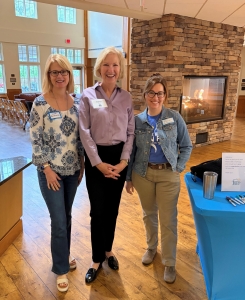
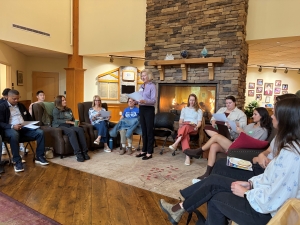 ignorance and pity, to caring, friendship, and ultimately recognizing people with disabilities as co-laborers. That distinction shaped much of the morning.
 Continue to Meet
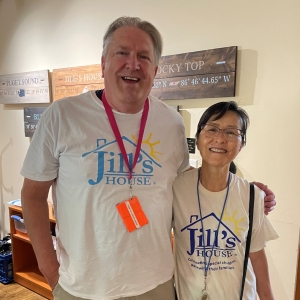
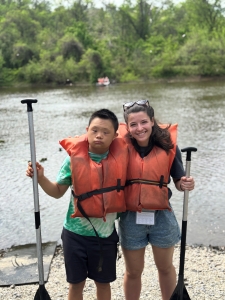
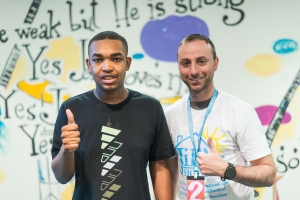 One of my favorite Jill’s House kids is a teenager I see pretty regularly. He’s incredibly talkative and always has a new topic he’s excited about. One day, we spent hours going through a book about fishing—somehow tying it into conversations about tow trucks—and even singing our way through the pages. We kept bouncing between ideas, laughing and talking, and before I knew it, hours had passed. It was such a simple moment, but it meant a lot. It reminded me how powerful it is to meet someone where they are and enter into their world. Jill’s House has become a place of grace and rest for me, and it’s changed me in ways I didn’t expect.
 Volunteering at Jill’s House has truly shaped how I think about patient care. It’s taught me that every child is different and that communication has to be individualized, thoughtful, and rooted in understanding. That perspective has already influenced my career path. I had been working as a certified nursing assistant, but Jill’s House inspired me to take a role as a behavioral technician working with children with autism and developmental disabilities. As I look ahead to medical school, I know what I’ve learned here will stay with me. It’s given me a deeper appreciation for compassionate, personalized care and has helped shape the kind of doctor I hope to become.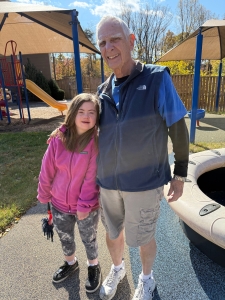
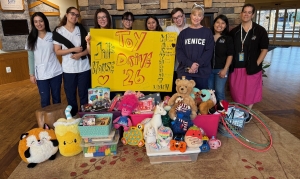 All of my students said this was their favorite clinical rotation so far. They were so impressed and grateful that they took the initiative to organize a toy drive, donating two bins of adaptive toys for Jill’s House families on their last day.