
Refreshed by One Another: Church Leaders Gather to Strengthen Disability Ministry
What happens when you bring together a room full of pastors, ministry leaders, disability advocates, parents, and people who simply want the church to better love families affected by disability?
You hear a lot of good ideas.
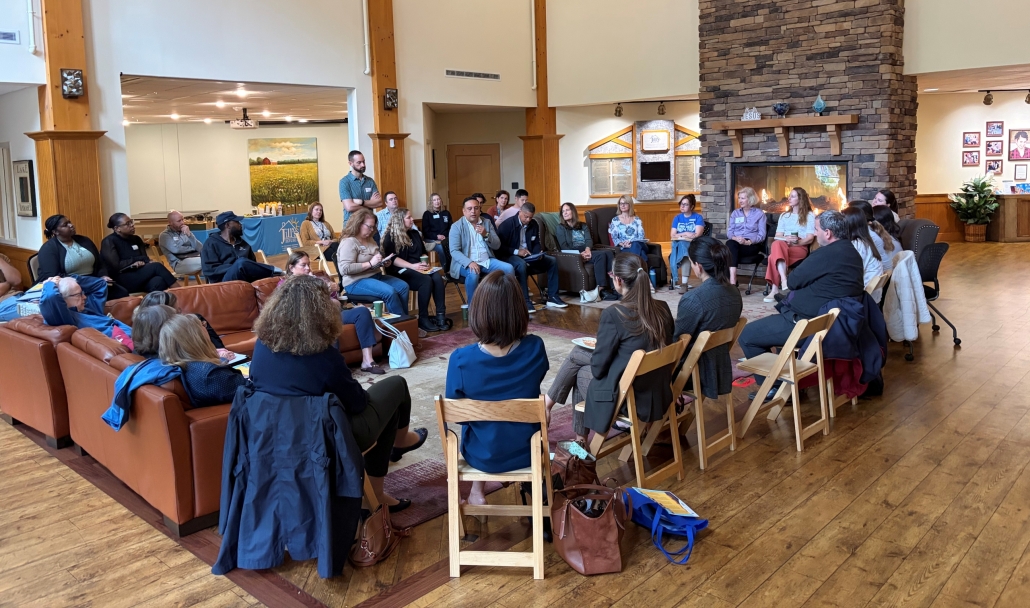
But you also begin to see something bigger: Welcoming people with disabilities doesn’t just change their experience of church. It changes the church community. That was one of the most powerful themes to emerge from a recent Church Leaders Roundtable hosted by Jill’s House.
Leaders from more than 20 churches and ministries across Northern Virginia gathered last week for an honest conversation about what is working, what remains difficult, and what we can learn from one another as we seek to create communities where people with disabilities and their families are known, loved, supported, and able to contribute their own God-given gifts.
From Caring to Co-Laboring
Early in the conversation, Jill’s House CEO Dana Hecht shared a framework describing a progression in how people can relate to those with disabilities: from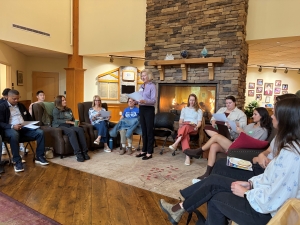 ignorance and pity, to caring, friendship, and ultimately recognizing people with disabilities as co-laborers. That distinction shaped much of the morning.
True belonging is more than allowing someone into the room. As the group discussed, belonging means knowing someone’s name, recognizing their gifts, giving them meaningful ways to participate—and noticing when they aren’t there.
And when that happens, the usual script begins to flip—from “We are serving them” to “They are teaching us” and “I’ve seen the church change.”
Participants described watching children, teenagers, and adults with disabilities serve, worship, greet people, build friendships, and share their gifts with the congregation. “There’s so much joy and fruit” when we recognize the gifts God has given people with disabilities, one participant reflected.
That may be one of the greatest opportunities before us: not simply creating ministries for people with disabilities, but building communities with them.
Start Somewhere
There was also encouragement for churches wondering, “But how do we do this?” The answer from those who have been doing it for years was reassuring: Start somewhere.
One ministry that today has a 30-year history began with only a few people and a tiny room. Other leaders described beginning with one sensory-friendly service, one gathering, or a small group of committed volunteers—and building from there.
Dana offered this encouragement: “Don’t let perfect be the enemy of good. Just do something, just start, take that first step.”
Another leader encouraged churches to look within their own congregations for people whose gifts and professional experience could help: special educators, physical therapists, speech therapists, parents, and others who may already have knowledge to share. And rather than trying to recreate every resource themselves, churches can build relationships with organizations already serving families in their communities.
Nothing Will Stop Us
Perhaps the most memorable image of the morning came from Mark 2. Four friends wanted to bring a paralyzed man to Jesus, but the house was so crowded that they couldn’t get through the door. So they climbed onto the roof, made an opening, and lowered their friend down to Jesus.
As one participant put it, “That’s special needs ministry right there: nothing will stop us from getting our friend to Jesus.”
It was a beautiful picture of the creativity, persistence, friendship, and love the group hopes to see throughout the church community.
 Continue to Meet
By the end of the morning, participants were already asking how they could stay connected, share resources, and continue learning from one another.
Hebrews 10:24–25 calls Christians to spur one another on toward love and good deeds, continuing to meet together and encourage one another.
That is our hope. We came together to talk about how we might better serve families affected by disability. We left refreshed by one another, encouraged by what God is already doing—and ready to keep the conversation going.
And we plan to keep meeting.