
Refreshed by One Another: Church Leaders Gather to Strengthen Disability Ministry

What happens when you bring together a room full of pastors, ministry leaders, disability advocates, parents, and people who simply want the church to better love families affected by disability?

You hear a lot of good ideas.

But you also begin to see something bigger: Welcoming people with disabilities doesn’t just change their experience of church. It changes the church community. That was one of the most powerful themes to emerge from a recent Church Leaders Roundtable hosted by Jill’s House.

Leaders from more than 20 churches and ministries across Northern Virginia gathered last week for an honest conversation about what is working, what remains difficult, and what we can learn from one another as we seek to create communities where people with disabilities and their families are known, loved, supported, and able to contribute their own God-given gifts.

From Caring to Co-Laboring

Early in the conversation, Jill’s House CEO Dana Hecht shared a framework describing a progression in how people can relate to those with disabilities: from ignorance and pity, to caring, friendship, and ultimately recognizing people with disabilities as co-laborers. That distinction shaped much of the morning.
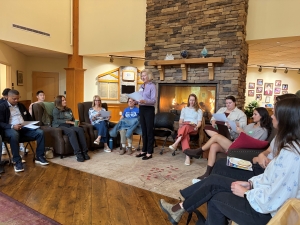
True belonging is more than allowing someone into the room. As the group discussed, belonging means knowing someone’s name, recognizing their gifts, giving them meaningful ways to participate—and noticing when they aren’t there.

And when that happens, the usual script begins to flip—from “We are serving them” to “They are teaching us” and “I’ve seen the church change.”

Participants described watching children, teenagers, and adults with disabilities serve, worship, greet people, build friendships, and share their gifts with the congregation. “There’s so much joy and fruit” when we recognize the gifts God has given people with disabilities, one participant reflected.

That may be one of the greatest opportunities before us: not simply creating ministries for people with disabilities, but building communities with them.

Start Somewhere

There was also encouragement for churches wondering, “But how do we do this?” The answer from those who have been doing it for years was reassuring: Start somewhere.

One ministry that today has a 30-year history began with only a few people and a tiny room. Other leaders described beginning with one sensory-friendly service, one gathering, or a small group of committed volunteers—and building from there.

Dana offered this encouragement: “Don’t let perfect be the enemy of good. Just do something, just start, take that first step.”

Another leader encouraged churches to look within their own congregations for people whose gifts and professional experience could help: special educators, physical therapists, speech therapists, parents, and others who may already have knowledge to share. And rather than trying to recreate every resource themselves, churches can build relationships with organizations already serving families in their communities.

Nothing Will Stop Us

Perhaps the most memorable image of the morning came from Mark 2. Four friends wanted to bring a paralyzed man to Jesus, but the house was so crowded that they couldn’t get through the door. So they climbed onto the roof, made an opening, and lowered their friend down to Jesus.

As one participant put it, “That’s special needs ministry right there: nothing will stop us from getting our friend to Jesus.”

It was a beautiful picture of the creativity, persistence, friendship, and love the group hopes to see throughout the church community.
Continue to Meet

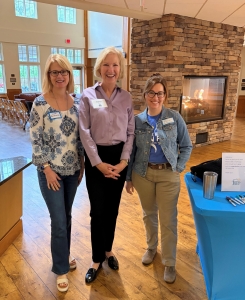
By the end of the morning, participants were already asking how they could stay connected, share resources, and continue learning from one another.

Hebrews 10:24–25 calls Christians to spur one another on toward love and good deeds, continuing to meet together and encourage one another.

That is our hope. We came together to talk about how we might better serve families affected by disability. We left refreshed by one another, encouraged by what God is already doing—and ready to keep the conversation going.

And we plan to keep meeting.
To Belong Means to Flourish

We’re pleased to share a very powerful article in the spring issue of Baylor Magazine titled “When Everyone Belongs.” Written about the work of Dr. Erik Carter and the Baylor Center for Disability and Flourishing, the article explores a simple but profound idea: Communities are transformed when individuals with disabilities are not merely accommodated, but truly welcomed and valued.

As Dr. Carter writes, “When we include and learn from people with disabilities, we don’t just make their lives better—each of us grows. We become more human, more faithful, and more whole.”

At Jill’s House, that truth comes to life every day. The children and families we serve continually remind us that belonging is not just about providing services or meeting needs. It is about relationships. It is about celebrating each person as a beloved child of God. And it is about the way a community grows richer when everyone has a place within it.

This vision of belonging is also reflected in the Baylor Impact Study, a research partnership between Baylor University and Jill’s House that examined how respite care and supportive community affect the well-being of families raising children with intellectual disabilities. The findings were incredibly encouraging, confirming what we hear from parents again and again: When families receive support and experience genuine belonging, their resilience, hope, and sense of community grow stronger.

We’re grateful for the thoughtful work being done by Dr. Carter and the Baylor Center for Disability and Flourishing, and we encourage you to read the full article here:

It beautifully captures something we see every day — when everyone belongs, everyone flourishes.

A Partnership That Prepares Nurses — and Changes Hearts

By Amy Joyner, DNP, MSN, BC-PMHRN, RN, Clinical Nursing Professor, Marymount University

Last Friday marked the completion of our first six-week pediatric clinical rotation at Jill’s House. What a remarkable experience it has been!

As a pediatric nurse in Northern Virginia for 37 years, I’ve known about Jill’s House since its inception. When I became a full-time clinical professor at Marymount University—truly my dream job—I began looking for innovative ways to prepare our students beyond traditional hospital settings. While our students receive excellent acute-care experience at Inova’s pediatric units, we recognized a growing need: Nursing students must also learn to care confidently for children and young adults with complex intellectual and developmental disabilities.

Jill’s House provided the perfect opportunity.

Over six Friday evenings, six undergraduate nursing students each completed 40 clinical hours, shadowing nurses at check-in and serving alongside the team throughout the night. From the very first evening, Jill’s House welcomed us with warmth, organization, and enthusiasm. Our students were included in intake conversations, learned family histories, and gained valuable insight into each child’s unique needs—always with parents’ permission and genuine excitement about the learning taking place.

What has impressed me most is the transformation in my students. During the first week, they were understandably cautious. A week later, they were jumping in without hesitation, assisting with bedtime routines, engaging in activities, and thoughtfully responding to behavioral challenges. One student gently discovered that a young child who seemed distressed was repeatedly saying “up,” and realized he was asking to be held. When she picked him up, he melted into her arms. That moment of connection is nursing at its very best.

Experiences like these cannot be replicated in a textbook. Nationwide, few nursing programs offer this level of exposure to individuals with profound intellectual disabilities. Yet this population is growing, and healthcare professionals must be prepared. The Virginia Department of Health has encouraged additional training in autism care, recognizing that more pediatric and adult patients will require informed, compassionate support. Marymount is proud to be ahead of the curve through this innovative partnership with Jill’s House.

Jill’s House promises families that they will be celebrated, welcomed, and experience true belonging. I can honestly say they extended that same spirit to our group of nursing students. Each week, we were given space for pre- and post-conference meetings, thoughtfully briefed on each child’s needs, and warmly invited into staff conversations. We never felt like outsiders in someone else’s space; we felt like partners. That culture of hospitality and preparation not only supports families well; it models for our students what compassionate, dignified care should look like.

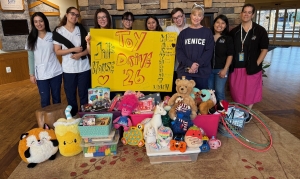
All of my students said this was their favorite clinical rotation so far. They were so impressed and grateful that they took the initiative to organize a toy drive, donating two bins of adaptive toys for Jill’s House families on their last day.


This partnership has truly been a two-way blessing. Our students have gained confidence, clinical insight, and compassion that will benefit them, their workplaces, and their patients and patient families for years to come.

Our first rotation ended on Friday, and another begins this week. Our hope is that this partnership continues for years to come.


Why The Good Feet Store Partners with Jill’s House 

Guest blogger Jonathan Cotten is CEO of Easy Step Enterprises, a franchisee of The Good Feet Store.

As a business owner, I am in the business of helping people get back on their feet—literally. I’ve seen how something as small as the right arch support can transform someone’s life, allowing them to move freely, run farther, and live without pain. True support goes beyond providing a product, it’s giving people hope on their journey. What started as my own personal journey as a marathon runner to find relief from foot pain led me to a new purpose—eventually growing my company, Easy Step Enterprises, into a 44-store franchisee of The Good Feet Store. But over the years, I’ve come to believe that true support goes far beyond physical relief. Sometimes, the most powerful thing you can do is help carry the weight that someone else has been holding for too long.

That belief is what led me to Jill’s House.

A Personal Connection

My family knows firsthand the challenges of caring for a kid with complex medical needs. Since 2012, we’ve been on a long health journey with my youngest daughter, Kayla. There have been countless doctor visits, hospital stays, and difficult nights filled with uncertainty. Anyone who has cared for a kid with serious health concerns knows that it doesn’t just affect one person—it affects the entire family.

That’s why, when I first heard about Jill’s House, it resonated with me in a way few things ever have. Here was an organization that truly understood what families like mine go through. Jill’s House isn’t just about caring for kids with disabilities—it’s about caring for the whole family. It provides exhausted parents with the chance to rest and recharge, knowing their kids are in a safe, loving environment, having the time of their lives.

I’ve spent years walking with my daughter through her health journey. I’ve seen the emotional, mental, and physical toll it takes on parents and siblings alike. But what about families who are on this journey for a lifetime? What about parents who will spend decades providing round-the-clock care for their child? They are some of the strongest people I have ever met. But even the strongest need support. They need a community that understands, that steps in, that gives them a moment to breathe.

That’s exactly what Jill’s House provides.

More Than Just Giving—A True Partnership 

At Easy Step Enterprises, we don’t believe in just writing checks to causes we care about. We believe in investing in organizations that are well-run, fiscally responsible, and making a real impact in the community. We seek out partnerships with organizations that align with our values—ones that are changing lives in a tangible, measurable way.

Jill’s House has become one of those partners. This mission isn’t just important to me—it’s important to my family. Two of my sons are actively involved in our business, but I’m deeply proud that my entire family together is committed to supporting families who need it most.

Why Jill’s House Needs You

I’ve seen firsthand what happens when people come together to support something bigger than themselves. The impact is life-changing.

Jill’s House is a place where kids with disabilities experience belonging, joy, and adventure, where parents find rest and renewal, and where families are reminded that they are not alone. But none of this happens without people who believe in their mission and choose to give—whether it’s time, resources, or financial support.

If you’ve ever wondered how you can make a real difference in someone’s life, this is it. Jill’s House changes lives—one family at a time.